Openfloat alternatives in Kenya: Cloud9, Payd, LOOP Biz, Workpay, FaidiHR and FinoQ
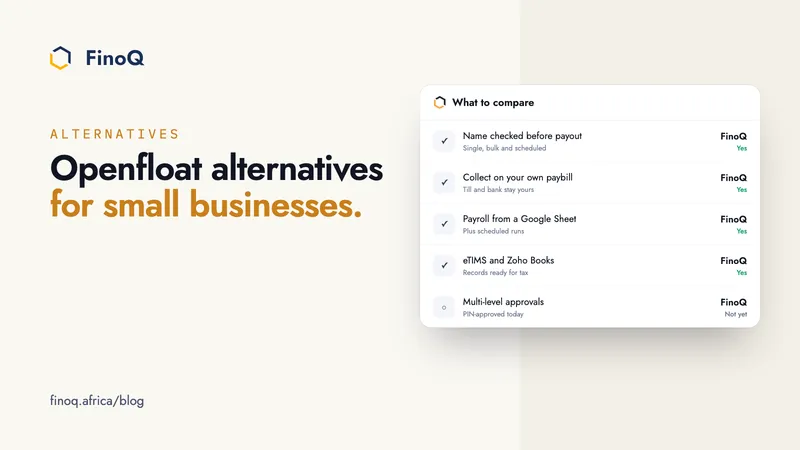
Looking beyond Openfloat for payroll, supplier payments and bulk payouts? What to compare, six alternatives side by side, and where each one fits.
Read post →Blog
Short, honest posts about reconciliation, tax, verification and payouts. Written for people who run businesses, and the people who build for them.
Looking beyond Openfloat for payroll, supplier payments and bulk payouts? What to compare, six alternatives side by side, and where each one fits.
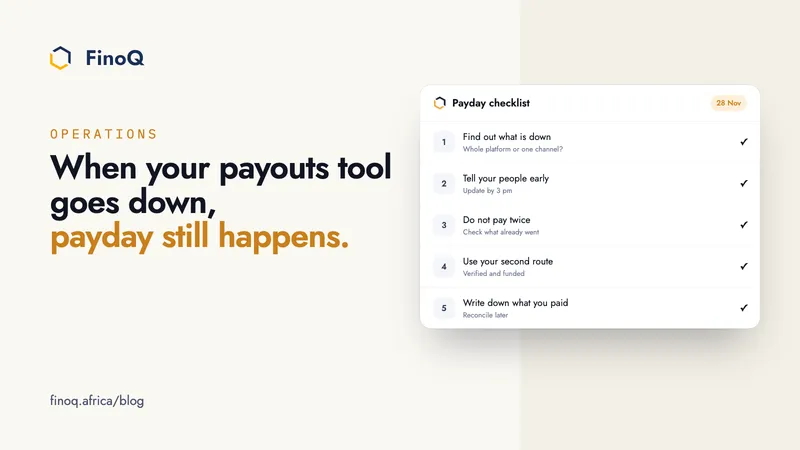
Read post →Salaries due, suppliers waiting, and your payouts platform is offline. What to do on the day, and how to set up so one outage never stops payday again.
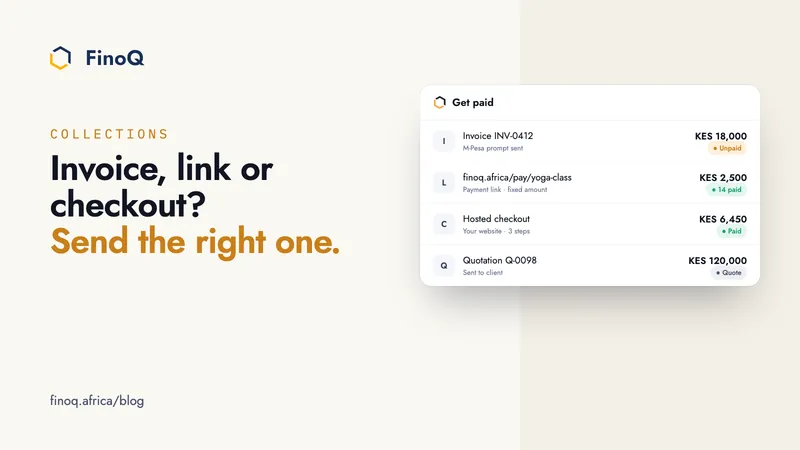
Read post →Three ways to get paid on FinoQ, and when to use each: invoices and quotes, payment links, and hosted checkout, all settling into the channel you pick.
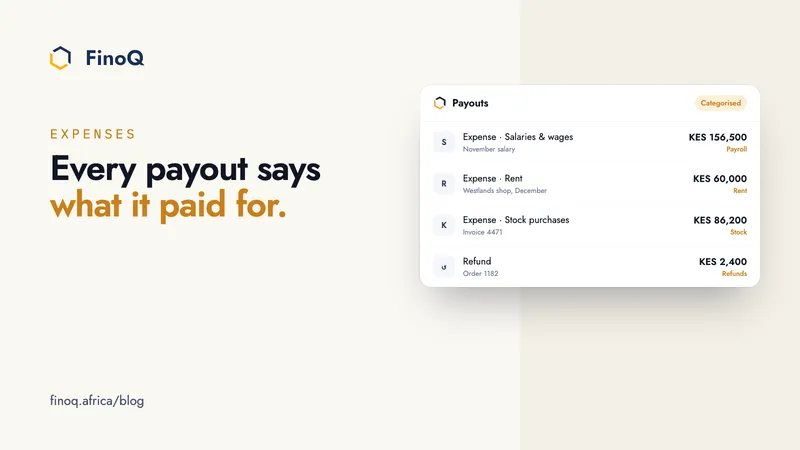
Read post →Tagging payouts with a spend category and a note turns a list of transfers into records your accountant can use. Here is a simple setup for small teams.
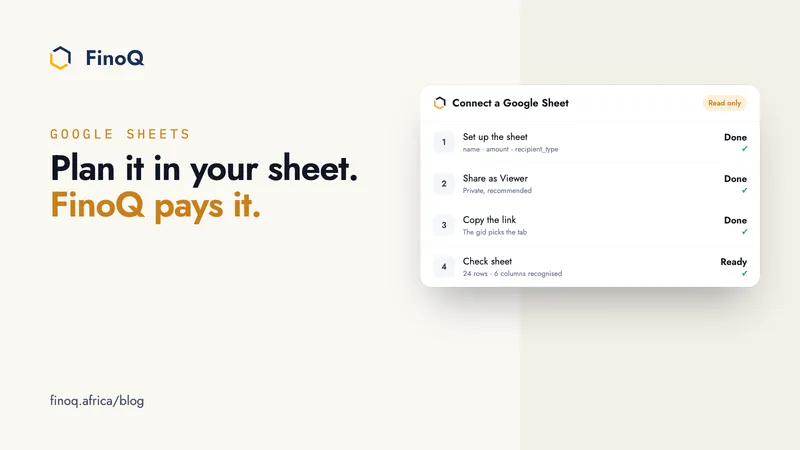
Read post →Keep payroll and supplier lists in the Google Sheet your team already uses, and let FinoQ read it for bulk payouts. Setup, columns and common fixes.
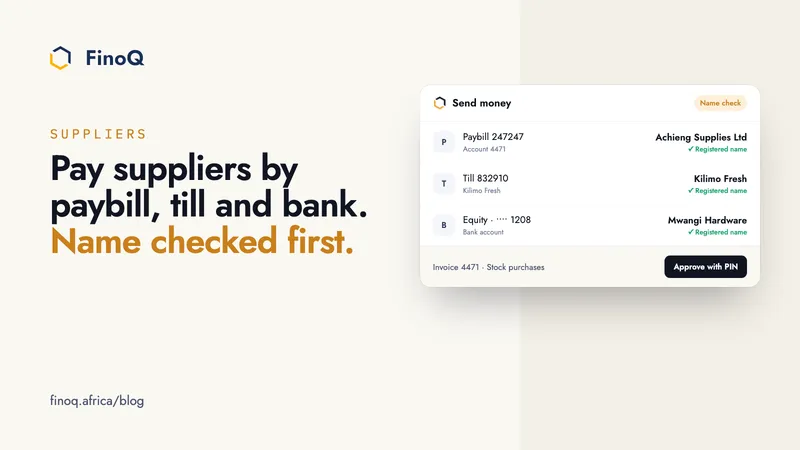
Read post →A practical guide to paying suppliers and vendors in Kenya: paybill, till and bank payouts from one place, name checks first, and a record for every invoice.
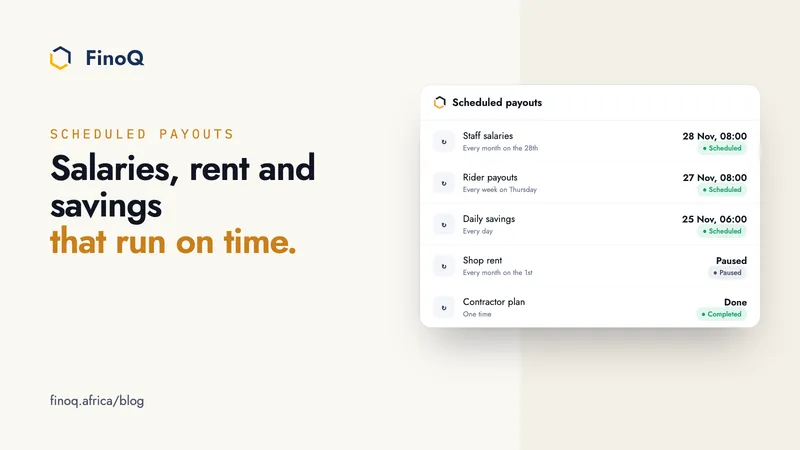
Read post →How scheduled payouts work on FinoQ: daily, weekly and monthly runs, what Paused and Awaiting approval mean, and how to keep every run funded.
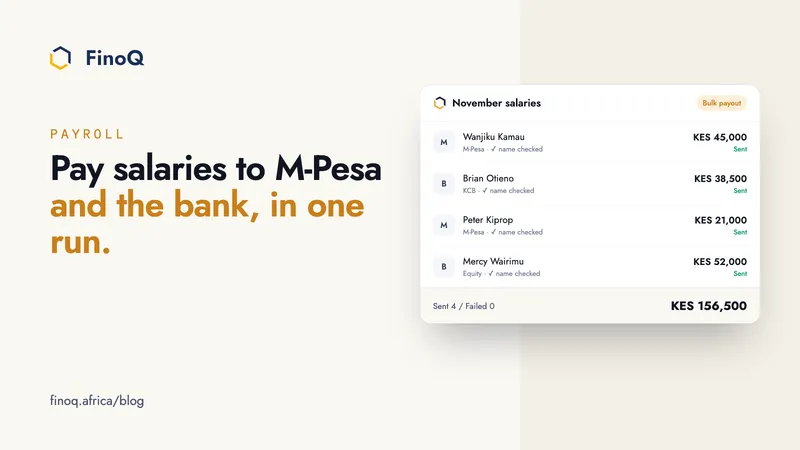
Read post →A step-by-step guide for Kenyan small businesses paying staff on M-Pesa and in the bank from one list, with names checked and every run on record.
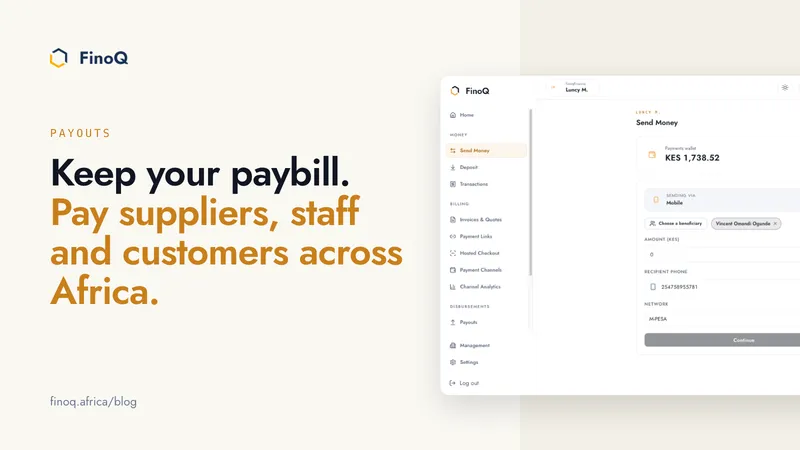
Read post →How a small Kenyan business can pay vendors, refund customers and run salaries without moving its collections, with B2C and B2B payouts explained.
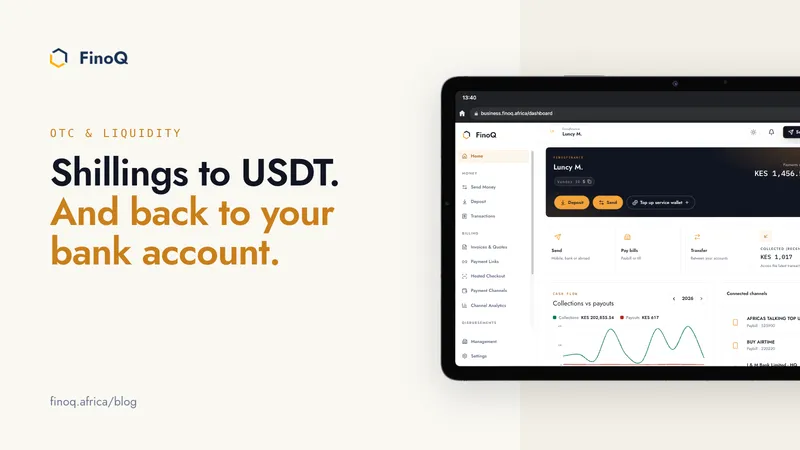
Read post →How a Kenyan business turns shillings into USDT and back through FinoQ, what OTC means in plain terms, and how we keep liquidity ready so trades settle.
Read post →International payouts and deposits for businesses inside and outside Kenya, routed through regulated partners, with the recipient's name verified.
Read post →A wrong digit sends money to a stranger. A one-step name check on the phone number or bank account prevents it.
Read post →Month-end takes days because payment data lives in three to six systems. Put it in one place and most of the work disappears.
Read post →Add a customer once, let FinoQ verify their ID, phone and bank account, then prompt them directly or send a pre-filled payment link.
Read post →Most businesses run three or more paybills, tills and bank accounts. Here is how to see revenue, expenditure and net per channel, in one view.
Read post →Real-time payment alerts, channel insights and PIN-approved payouts, in the chat you already have open. No new app to install.
Read post →Same team, same platform, same accounts. A new name that says what the product actually does: financial operations, connected in one place.
Read post →Before you settle a vendor or refund a customer, one click tells you whose phone number or bank account it really is. Here is why that matters more than most finance controls.
Read post →If you are building a credit product, your moat is credit scoring. Not six months of M-Pesa, bank and card integrations. A note for fintech founders and the engineers who work for them.
Read post →Subscribe with the RSS feed.
You worry about running your business. Open an account, connect the channels you already use, and see everything in one place.